
Measurement Equipments
Humidity Meter
Know how much water your air carries, and whether it comes from the weather or from your equipment.
Product overview
See the moisture in your air, before it reaches production
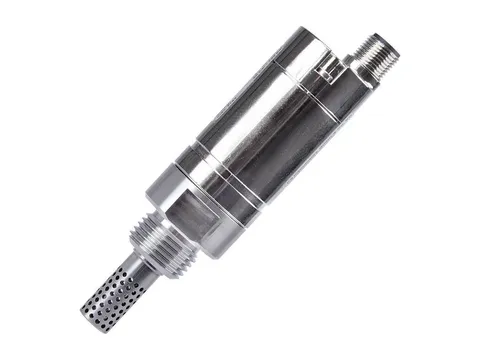
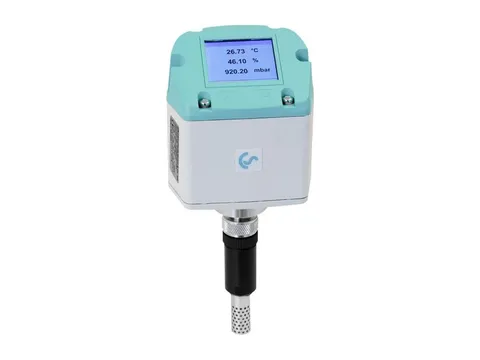
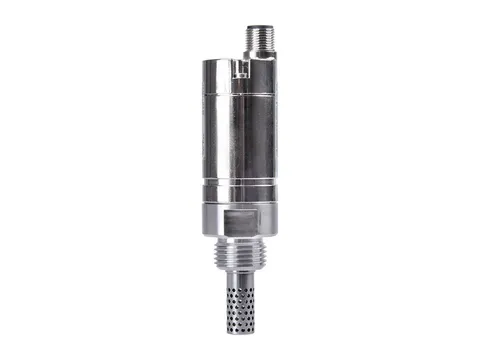
Our humidity meter measures the relative humidity (RH) and temperature of air or gas at the same point, in the same probe, and calculates the values that follow from them: dew point, absolute humidity and mixing ratio. In your compressed air plant it measures both the ambient conditions that set the water load entering your compressors and the moisture in the compressed air itself, at line pressure or in a sample expanded to atmosphere.
RH tells you how close air is to condensing, and it has no meaning without the temperature beside it, which is why the meter always reads both together. Measured at line pressure, the dew point it calculates is the pressure dew point (PDP) that ISO 8573-1:2010 uses to define water classes.
Air leaving a refrigerated drying stage at +3 °C PDP and reheated to 25 °C sits at about 24 % RH, in the most accurate part of the meter's 0–100 % range. Applied under the test methods of ISO 8573-3, the meter gives you the evidence that water class 4, 5 or 6 has been achieved, and records the ambient conditions that explain changes between seasons.
- 0–100 %Relative humidity measuring range
- +3 °CPDP for ISO 8573-1:2010 water class 4
- 2.3 timesThe water in 35 °C, 80 % RH intake air compared with 25 °C, 60 % RH
- 640 kgCondensate a day from 1,000 m³/h drawn in at 35 °C, 80 % RH, compressed to 7 bar g
Benefits
The problems it solves
Every compressed air system turns water vapour from the atmosphere into liquid. Here is what happens when nobody measures it, and how the meter helps.
-
Water at the machine
The problem
Without a measured value, the first sign of a drying problem is water at a machine, a rusted valve or a rejected product batch.
How it solves it
A rising dew point reveals a fouled heat exchanger, failed drain or open bypass before liquid water reaches production.
-
Weather or equipment?
The problem
Intake air at 35 °C and 80 % RH carries 2.3 times the water of air at 25 °C and 60 % RH, so the load on your plant swings with the season.
How it solves it
Paired ambient and compressed air readings show whether wet air comes from the weather or from your equipment.
-
Proving your air class
The problem
Customers, auditors and equipment manufacturers specify air by ISO 8573-1:2010 water classes, which are defined by pressure dew point.
How it solves it
A measured PDP confirms water class 4, 5 or 6 (+3 °C, +7 °C or +10 °C PDP) for audits and customer specifications.
-
Condensation in panels
The problem
Condensation inside control panels, drives and switchgear causes tracking, short circuits and corroded contacts.
How it solves it
RH monitoring in compressor rooms and panels flags the condensation risk before faults occur.
-
Drains that cannot keep up
The problem
A compressor delivering 1,000 m³/h of free air drawn in at 35 °C and 80 % RH, compressed to 7 bar g and cooled back to 35 °C, condenses roughly 640 kg of water a day in its aftercooler, separator and receiver.
How it solves it
Intake readings quantify the water your drains and oil–water separators must handle each day.
-
Records for regulated plants
The problem
Food and pharmaceutical plants keep dew point and humidity records for HACCP and GMP.
How it solves it
Continuous logging gives you dated records that support GMP, HACCP and ISO 9001 documentation.
Where it’s used
From the compressor room to the production floor
Anywhere moisture in the air affects your equipment, your product or your records, the meter gives you a number to work with.
-

Automotive and general manufacturing
Plant air for cylinders, tools and paint shops, checked at the point of use where condensate causes rust and finish defects.
-

Food and beverage
Dew point records for HACCP, and RH in packing areas and ingredient stores where powders cake.
-

Pharmaceuticals
Humidity in tablet compression, coating and capsule filling rooms, and in the utility air supplying them, for GMP environmental records.
-

Textiles
Spinning and weaving halls held within RH bands to control yarn breakage and static, and the moisture of air-jet loom supply air.
-

Power generation and utilities
Switchgear rooms, cable basements and control buildings, where condensation causes tracking and corrosion.
-

Plastics and packaging
Ambient RH around dryers and moulding machines, which affects the handling of hygroscopic resin.
Also compressed air system audits, dryer commissioning and service, electronics assembly, cold chain and warehousing, HVAC and building services, and laboratories and calibration rooms.
How it works
Absorb, sense, calculate
A thin polymer film takes up water from the air until it matches the humidity around it. The meter reads that as capacitance, pairs it with temperature, and works out the dew point.
-
1. Probe in the lineThe probe enters your compressed air through an isolation ball valve, so it sees the air at line pressure and can be withdrawn while the system runs. It is fitted in the top or side of the pipe, where liquid water cannot flood it.
-
2. Water enters the filmWater molecules pass through a thin, porous top electrode into a hygroscopic polymer film, until its water content is in equilibrium with the air around it. The film is only micrometres thick, so it settles quickly.
-
3. Capacitance becomes RHDry polymer has a relative permittivity of roughly 3 to 4, and water about 80. Every absorbed molecule raises the film's capacitance, close to linearly in RH, and the meter converts it to a reading from 0 to 100 %.
-
4. Temperature beside itA temperature element sits in the same probe, as close to the humidity element as possible. A 1 K difference between probe and air changes RH by about 6 % of the reading at 20 °C, so both are measured at one point.
-
5. Dew point and moreFrom RH and temperature, the meter calculates dew point, absolute humidity and mixing ratio. At line pressure the dew point is your PDP. For an expanded sample, you enter the line pressure and the meter converts the reading back to PDP.
Air at 7 bar g and +3 °C PDP reads about 32 % RH at 20 °C at line pressure, and about 4.1 % RH once expanded to atmosphere.
Get the full details
Our brochure covers it in detail, and our questionnaire tells us what we need to recommend the right one for your plant.
Keep exploring
More from our range
Equipment for every stage of your compressed air, and our own engineers to test, commission and look after it.
-
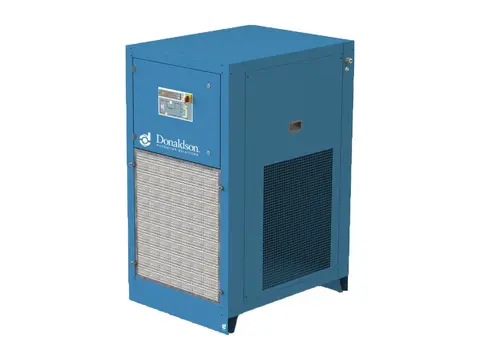
Refrigerated Air Dryers
Dry, condensate-free air for your plant, with no compressed air spent drying.
View product -
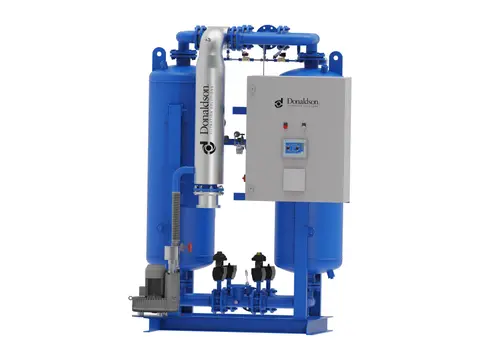
Heated Desiccant Dryers
Deep, stable dew points for your air, with heat doing the regeneration.
View product -
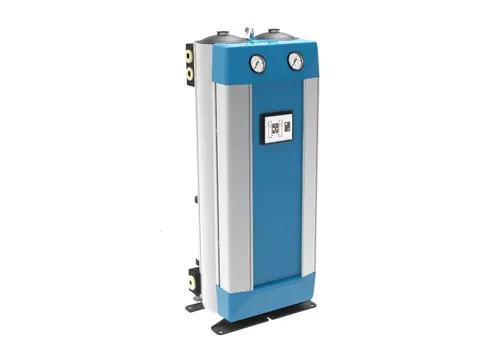
Heatless Desiccant Dryers
Deep dew points without heaters, for hazardous areas and remote sites.
View product -
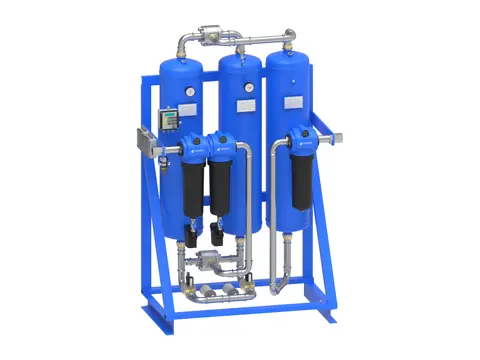
Breathing Air Systems
Your plant’s compressed air, made safe to breathe.
View product -
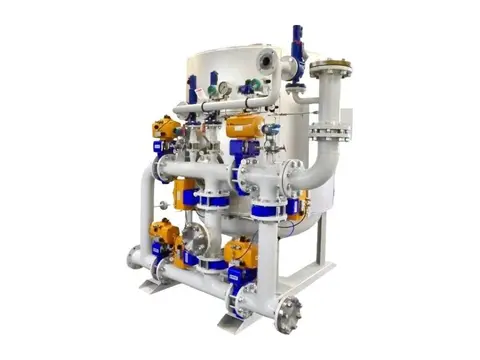
Hydrogen Dryers & De-Oxo Units
Electrolytic hydrogen purified of oxygen and water, ready for fuel cells.
View product -
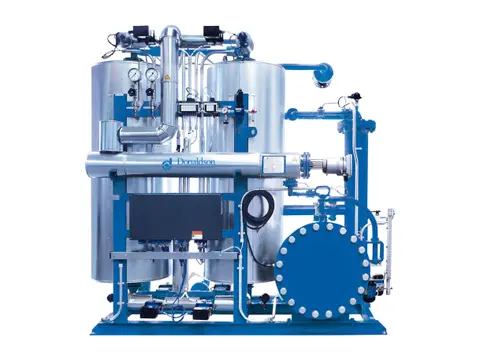
Biogas & Natural Gas Dryers
Dry, condensate-free fuel gas for your engines, boilers and upgrading plant.
View product -
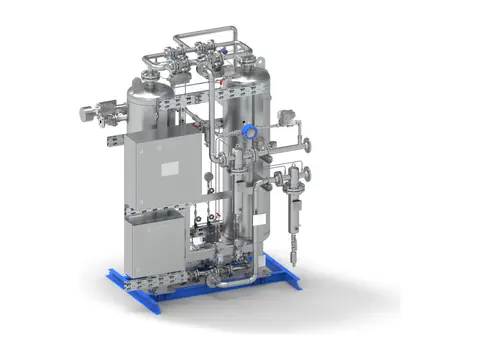
CO₂ Dryers
Beverage-grade dry CO₂ for your recovery plant, with no gas vented.
View product -
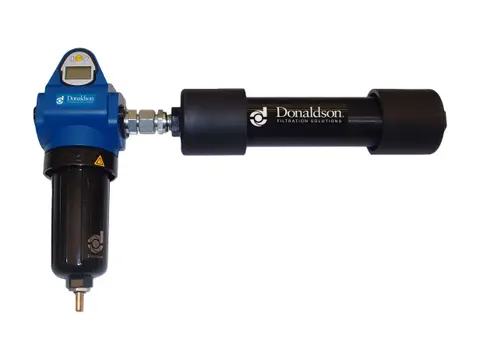
Membrane Dryers
Dry air at the point of use, with no power and no moving parts.
View product
-
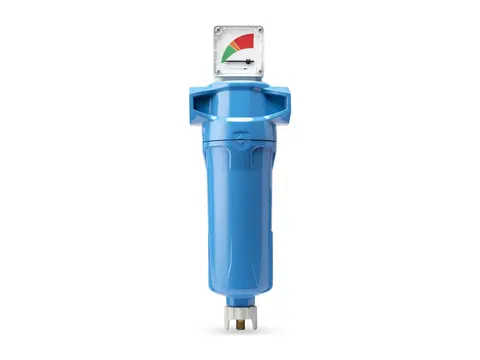
Coalescing Filters
Takes oil and water aerosols out of your air, down to 0.01 mg/m³.
View product -
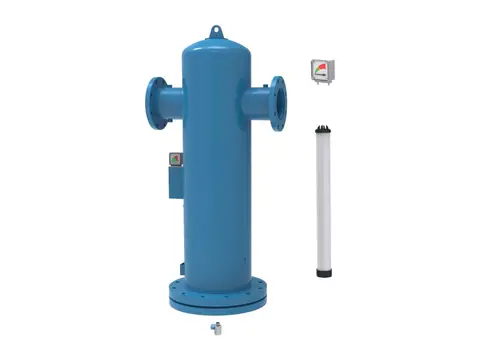
Particulate Filters
Dry, dust-free air for your plant, down to 0.01 µm particles.
View product -
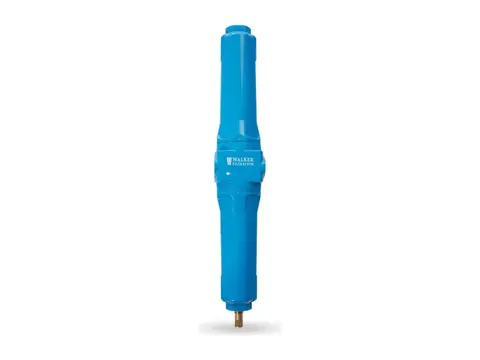
Compressed Air Duplex Filters
Change filter elements without interrupting your air supply.
View product -
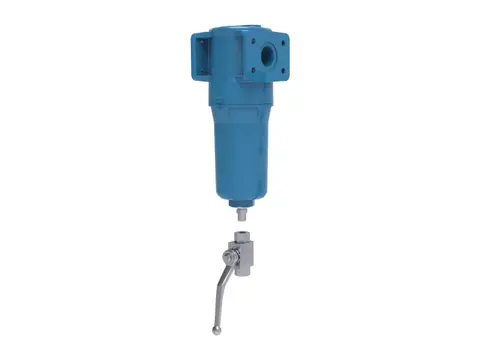
High Pressure Filters
Certified air purity for your high-pressure lines, up to 350 bar g.
View product -
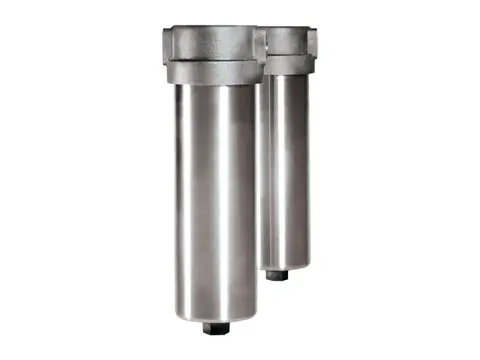
High Temperature Filters
Particle-free compressed air and gas where your process runs hot.
View product -
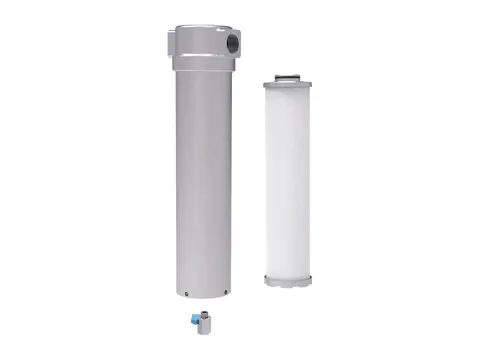
Ammonia and Refrigerant Filters
Keeps compressor oil out of your condensers and evaporators.
View product -
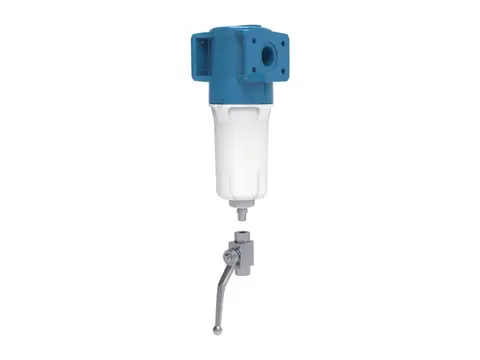
Oxygen Filters
Particle-free oxygen for your system, without adding an ignition source.
View product -
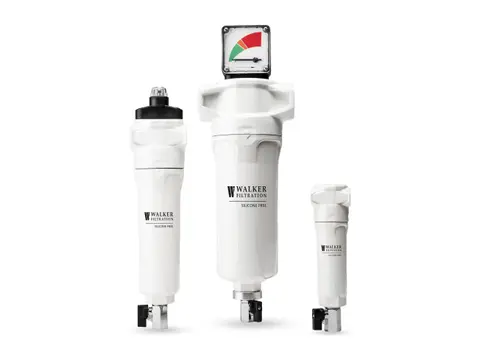
Silicone-Free Filters
Crater-free paint finishes, from air free of paint-wetting contaminants.
View product -
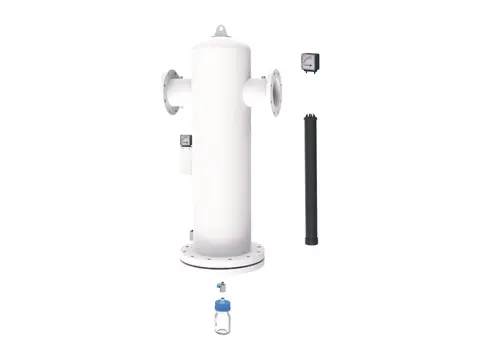
Medical Vacuum Filters
Keeps pathogens from hospital suction away from your pumps and exhaust.
View product -
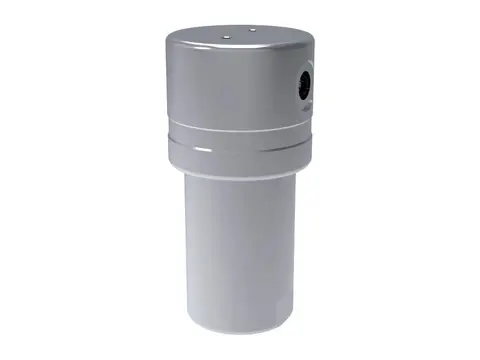
Hydrogen Filters
Particle, aerosol and oil-free hydrogen, from electrolyser to dispenser.
View product -
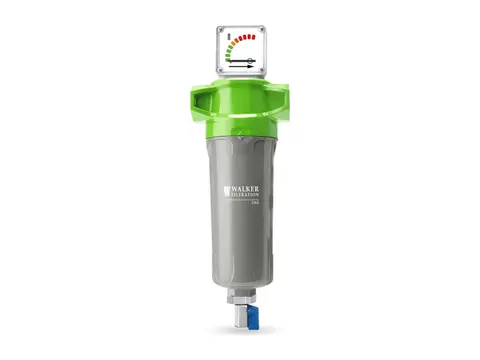
CNG Filters
Oil-free, particle-free natural gas from your compressor to the vehicle.
View product
-
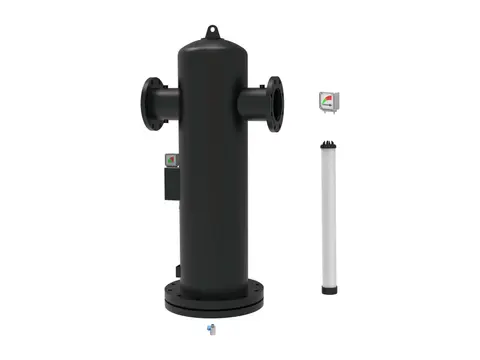
Centrifugal Moisture Separators
Bulk liquid out of your air by centrifugal force, with no element to replace.
View product -
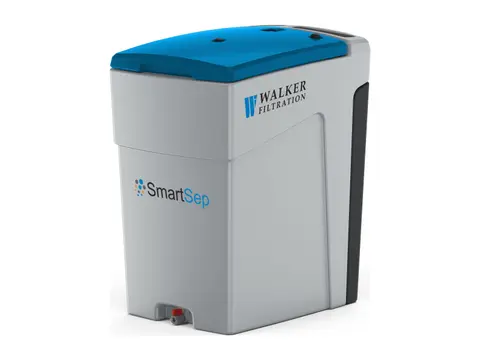
Oil Water Separator
Turns oily compressor condensate into water fit for sewer discharge.
View product -
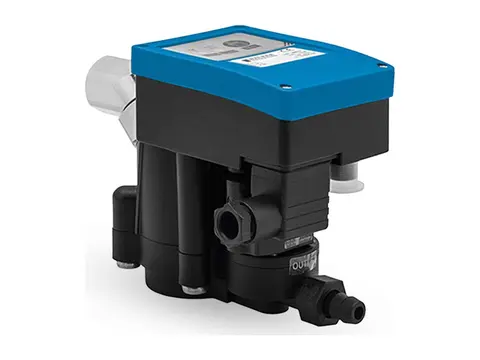
Zero-Loss Electronic Drain
Discharges every drop of condensate from your system, never your compressed air.
View product -
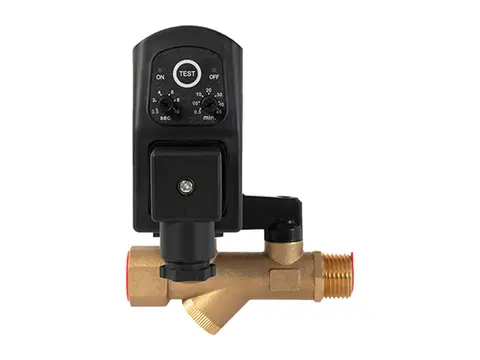
Timer Drain
Scheduled, positive condensate discharge from any collection point in your system.
View product -
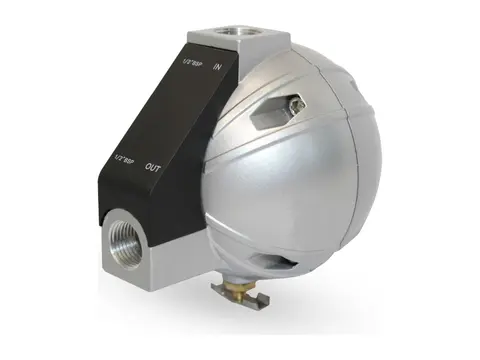
Mechanical Float Drain
Buoyancy-driven condensate removal with no power and no air loss.
View product -
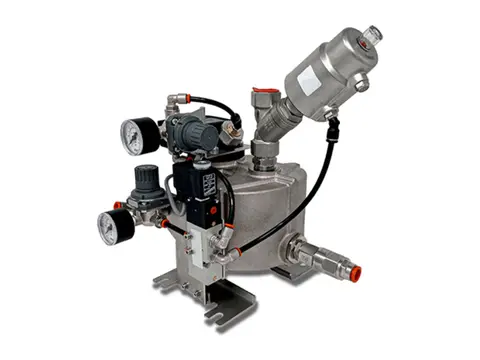
Vacuum Drain
Empties liquid from your vacuum system without breaking the vacuum.
View product
-
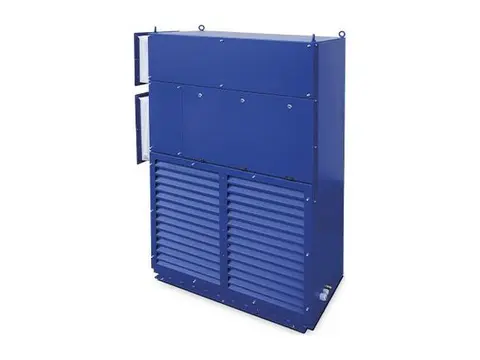
Crane Air Conditioner
Cool, clean cabins and electrical rooms for cranes working in extreme heat.
View product -
Tent Air Conditioner
Controlled climate for your tents, shelters and temporary structures.
View product -
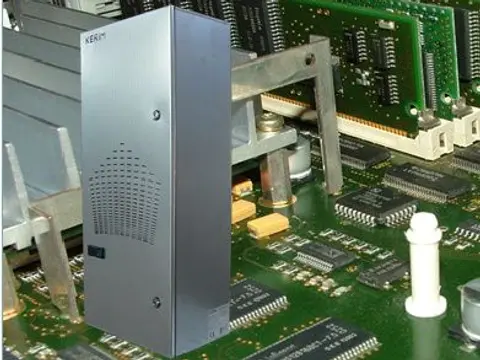
Panel Air Conditioner
Cool, clean, dry control panels, even in your hottest, dirtiest plant areas.
View product -
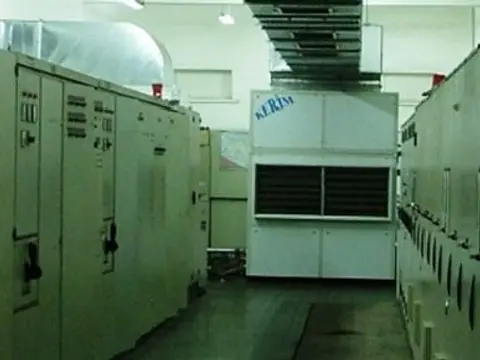
Air / Water Cooled Air Conditioner
Stable room temperatures for your electrical rooms in extreme plant heat.
View product
-
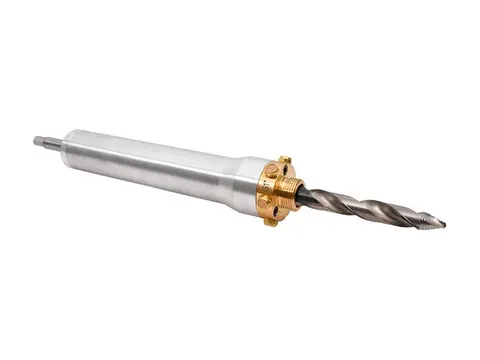
Hot Tapping
Add measurement ports to your live air lines without stopping production.
View product -
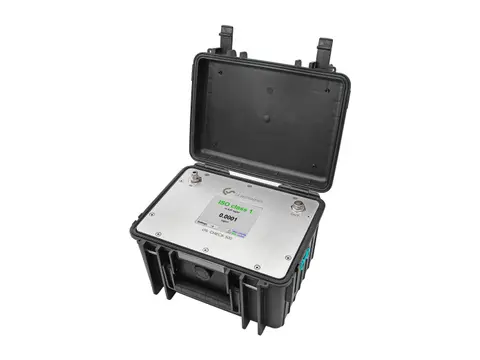
Compressed Air Quality Measurement
Prove your air's ISO 8573-1 purity: particles, oil and dew point.
View product -
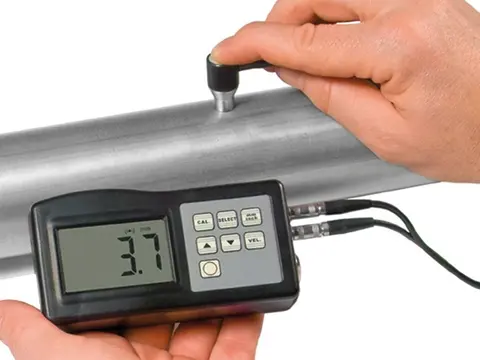
Digital Thickness Meter
Measure the metal left in your receivers and pipework, from the outside.
View product -
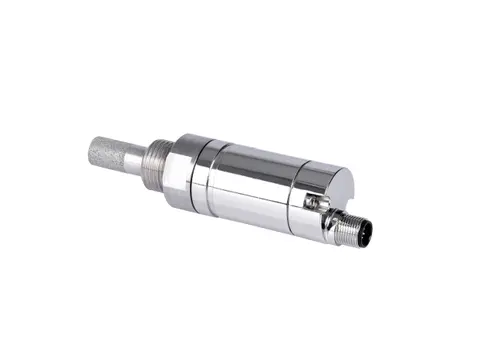
Dew Point Meter
Proof your air is dry, measured at line pressure.
View product -
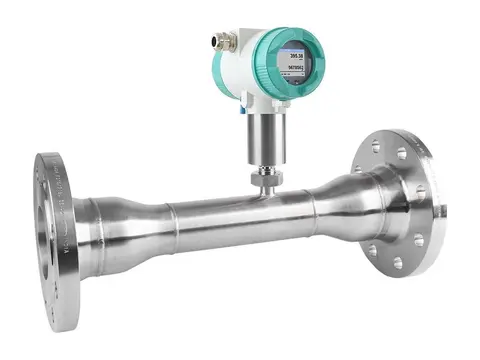
Flow Meter
True standard flow of your compressed air, whatever the line pressure.
View product -
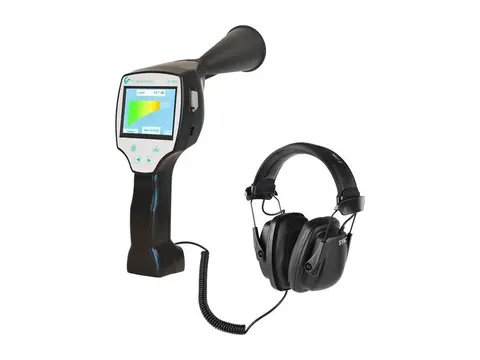
Leak Detector
Hear, locate and cost every compressed air leak in your plant.
View product -
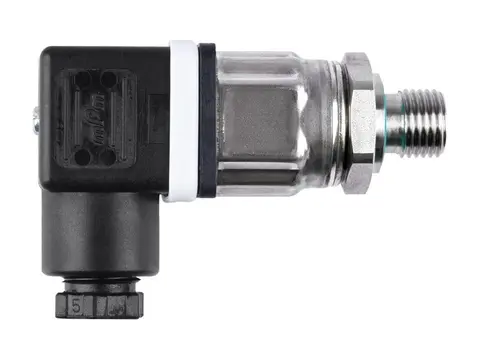
Pressure Sensor
Live pressure data from your compressor room to every point of use.
View product -
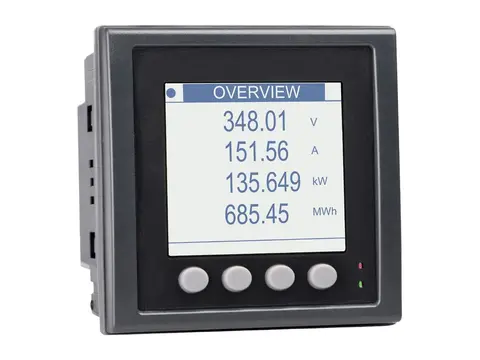
Power Meter
Measure the true power, energy and efficiency of your compressors.
View product
-
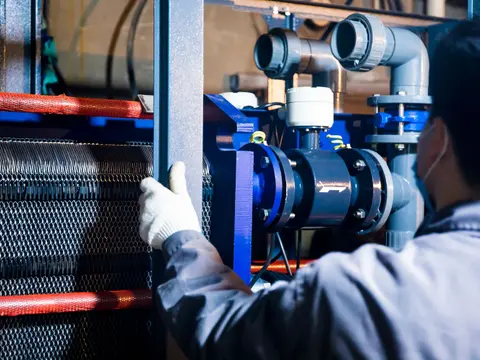
Health Testing of Compressed Air & Gas Dryers
Measured proof your dryer delivers its rated dew point.
View service -
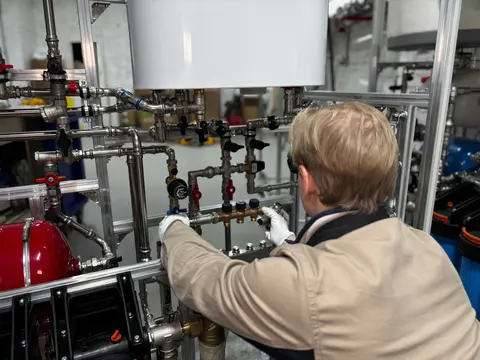
Commissioning and Service of Compressed Air & Gas Dryers
Verified dew point from first start-up through your dryer's service life.
View service -
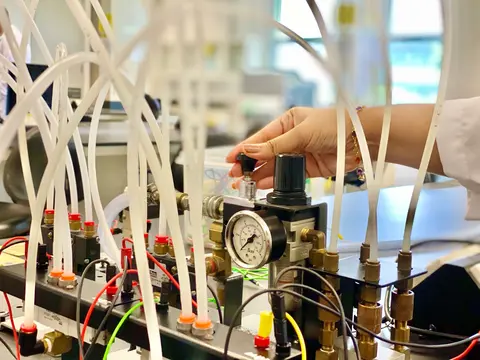
Compressed Air Quality Testing
Measured, documented proof of your compressed air purity class.
View service -
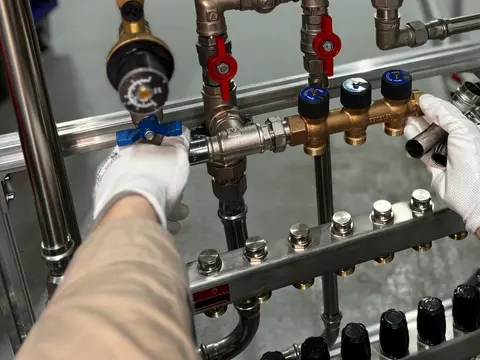
Dew Point Measurement Testing
Verified pressure dew point at the points that matter in your network.
View service -
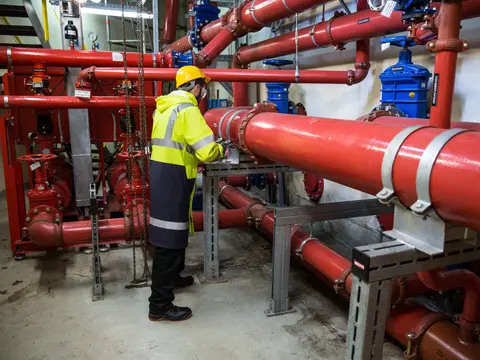
Compressed Air Flow Testing
Measured air demand, leakage and cost for your plant, not estimates.
View service -
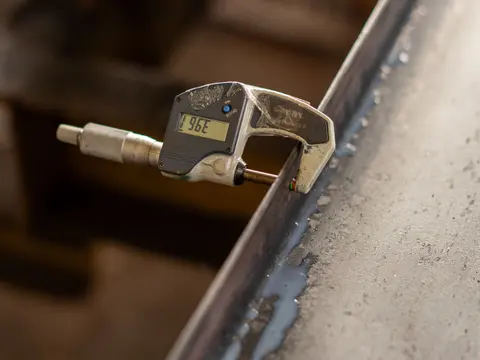
Wall Thickness Testing
Know the remaining wall, corrosion rate and safe life of your equipment.
View service -

Sourcing
Spares, consumables and whole systems for your plant, sourced globally.
View service
