
Condensate Management
Vacuum Drain
Liquid out of your vacuum system, with suction running and the vacuum never broken.
Product overview
Empty vacuum vessels without breaking the vacuum
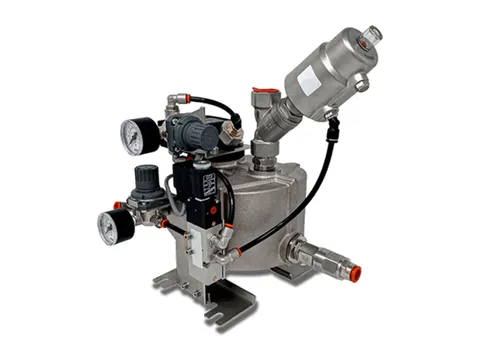
Our vacuum drain removes liquid from vessels running below atmospheric pressure: vacuum filter bowls, liquid separators, knockout pots, vacuum receivers and pipework low points. It discharges water, condensate, coolant or aspirated process fluid while your vacuum system keeps running.
At 100 mbar absolute, the atmosphere outside the vessel is 913 mbar higher than inside it, so an open valve simply draws air in and holds the liquid back. Draining by gravity alone would need a sealed water column of about 9.3 m. The vacuum drain uses an airlock instead, and at no point is there an open path between your vacuum system and atmosphere.
A float triggers each cycle, so the drain runs as often or as rarely as the inflow needs. In medical and laboratory systems the discharge can be piped to a sealed collection container, keeping potentially infectious fluid contained.
- 913 mbarPressure difference at 100 mbar absolute
- About 9.3 mWater column that gravity draining would need
- Under 20 msFor a 100 m³/h pump to clear a cycle's air at 200 mbar
- About 0.03 %Added gas load, one cycle a minute at 200 mbar
Benefits
The problems it solves
Liquid cannot leave a vessel under vacuum by gravity, and most vacuum processes draw liquid in. Here is what that does to a system, and how the drain deals with it.
-
Stopping to drain by hand
The problem
Manual draining means isolating the vessel, breaking vacuum, emptying it and re-evacuating it, so dependent processes stop.
How it solves it
Filters, separators and receivers empty without stopping suction at your points of use.
-
Pumps damaged by liquid
The problem
Water emulsifies the oil in oil-sealed pumps and corrodes dry pump rotors, and a liquid slug overloads any positive displacement pump.
How it solves it
Liquid is removed at the filters and separators before it can reach your pump.
-
Flooded filter elements
The problem
A bowl that fills until liquid reaches the element wets the medium, cutting suction at the points of use.
How it solves it
Bowls stay empty and elements stay dry, holding pressure drop at its design value.
-
Air leaks at the drain
The problem
Every air leak into a vacuum system uses pump displacement that would otherwise hold the vacuum.
How it solves it
Each cycle admits only the air trapped in a small chamber, so the vacuum at the vessel does not fall measurably.
-
Liquid that turns back to vapour
The problem
Liquid left standing under vacuum evaporates back into the gas stream: each kilogram becomes about 28 m³ of vapour at 50 mbar and 33 °C.
How it solves it
Liquid leaves the system as liquid, so your pump does not have to evacuate its vapour.
-
Infectious discharge
The problem
Liquid from bacteria filters in medical and laboratory vacuum is potentially infectious.
How it solves it
A single piped discharge feeds a sealed collection container, keeping contaminated liquid away from your staff and plant room.
Where it’s used
Wherever vacuum draws in liquid
Most processes that use vacuum draw in liquid or vapour with the air. The drain sits wherever that liquid collects, upstream of the pump.
-

Hospitals
Central medical vacuum plant with duplex bacteria filters and drainage flasks upstream of the pumps, as described in HTM 02-01.
-

Dental practices and clinics
Dental suction draws saliva, water spray and blood with the air, a continuous liquid load at the separator.
-

Laboratories
House vacuum for filtration, rotary evaporators, vacuum ovens and desiccators, all releasing solvent or water vapour into the line.
-
Food packaging and dairy
Vacuum packaging of meat, fish and cheese draws moisture and brine into the pipework, and milking installations collect milk and wash water.
-
Plastics extrusion
Vacuum calibration tanks for pipe and profile draw water spray into their vacuum lines continuously.
-
Pharmaceutical and chemical processing
Vacuum drying, distillation, evaporation and degassing release vapour that condenses in cooler pipework and filters.
Also CNC machining and woodworking, printing and paper converting, electronics assembly, vacuum conveying and lifting, and composites manufacturing.
How it works
An airlock for liquid
The drain never opens your vacuum system to atmosphere. A small chamber takes the liquid at system vacuum, is sealed off and vented, and lets the liquid run out under its own weight.
-
1. CollectThe chamber sits at system vacuum, so liquid runs into it by gravity and lifts the float, while the air it displaces returns through the equalisation line.
-
2. IsolateAt the upper trip point, the inlet valve and equalisation line close. The full chamber is sealed from your vacuum system, and new liquid waits above the closed inlet valve.
-
3. VentThe vent opens and atmospheric air enters the small air space. The chamber reaches atmospheric pressure within a fraction of a second.
-
4. DischargeThe outlet valve opens and the liquid drains under its own weight to the tundish or collection container, with vent air taking its place.
-
5. ResetAt the lower trip point, the outlet valve and vent close, the pump draws the chamber back to system vacuum and the inlet valve reopens. A 0.1 L chamber at 100 mbar admits 1.0 L of air at system pressure.
Figures for a system at 100 mbar absolute.
Get the full details
Our brochure covers it in detail, and our questionnaire tells us what we need to recommend the right one for your plant.
Keep exploring
More from our range
Equipment for every stage of your compressed air, and our own engineers to test, commission and look after it.
-
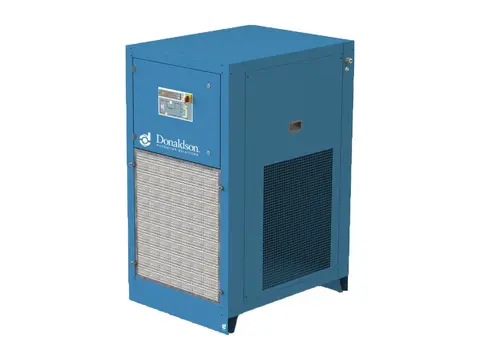
Refrigerated Air Dryers
Dry, condensate-free air for your plant, with no compressed air spent drying.
View product -
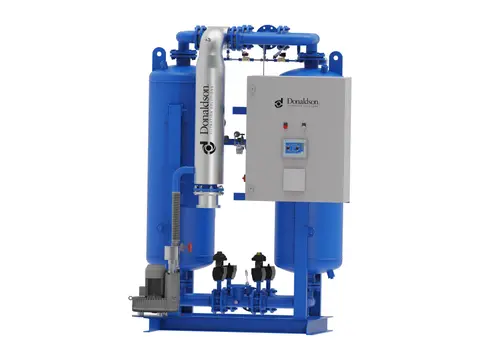
Heated Desiccant Dryers
Deep, stable dew points for your air, with heat doing the regeneration.
View product -
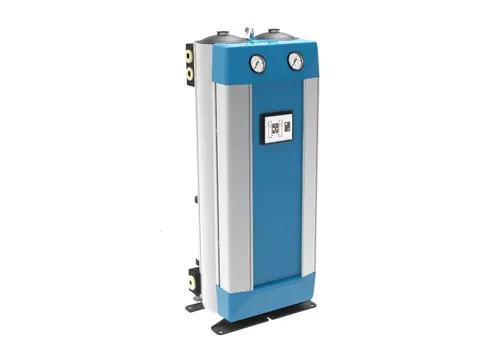
Heatless Desiccant Dryers
Deep dew points without heaters, for hazardous areas and remote sites.
View product -
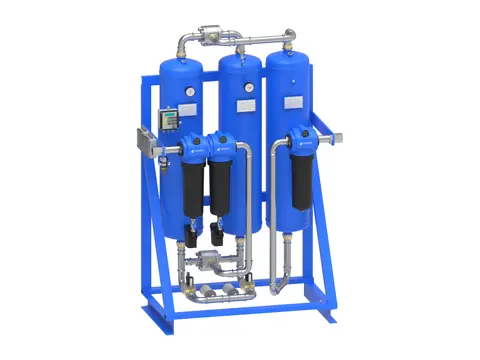
Breathing Air Systems
Your plant’s compressed air, made safe to breathe.
View product -
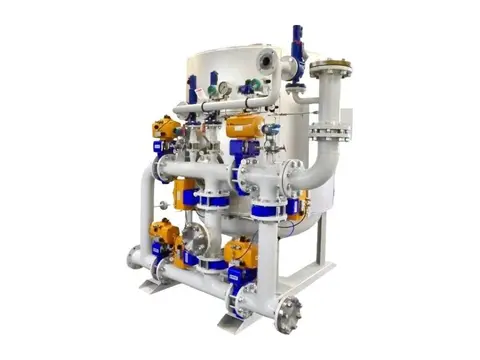
Hydrogen Dryers & De-Oxo Units
Electrolytic hydrogen purified of oxygen and water, ready for fuel cells.
View product -
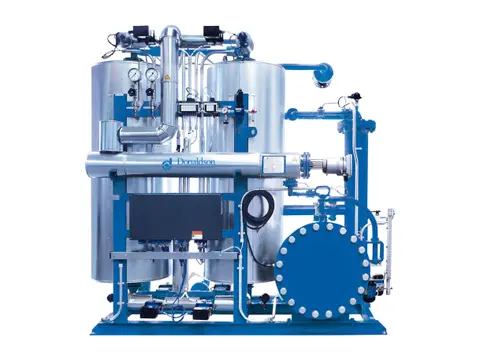
Biogas & Natural Gas Dryers
Dry, condensate-free fuel gas for your engines, boilers and upgrading plant.
View product -
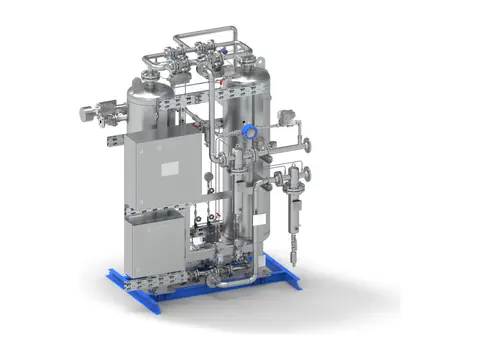
CO₂ Dryers
Beverage-grade dry CO₂ for your recovery plant, with no gas vented.
View product -
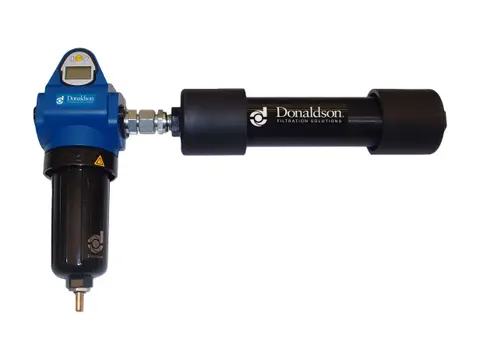
Membrane Dryers
Dry air at the point of use, with no power and no moving parts.
View product
-
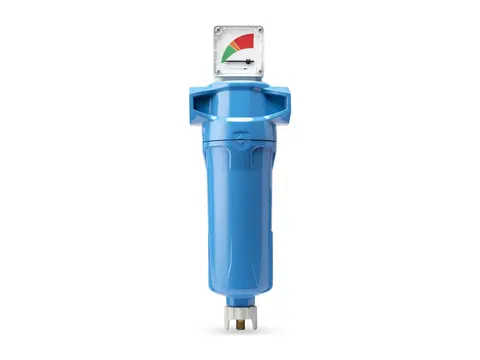
Coalescing Filters
Takes oil and water aerosols out of your air, down to 0.01 mg/m³.
View product -
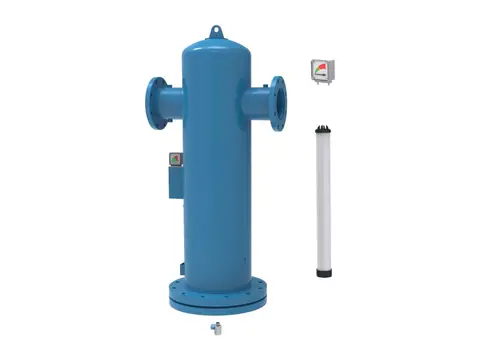
Particulate Filters
Dry, dust-free air for your plant, down to 0.01 µm particles.
View product -
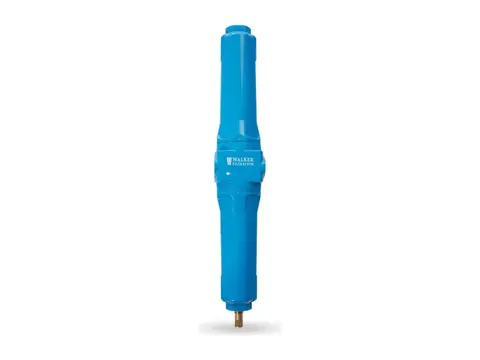
Compressed Air Duplex Filters
Change filter elements without interrupting your air supply.
View product -
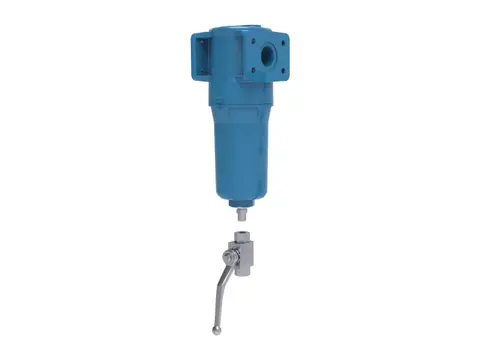
High Pressure Filters
Certified air purity for your high-pressure lines, up to 350 bar g.
View product -
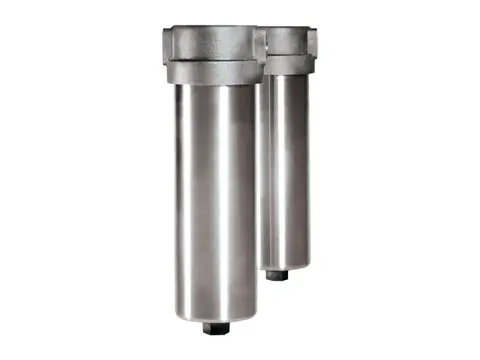
High Temperature Filters
Particle-free compressed air and gas where your process runs hot.
View product -
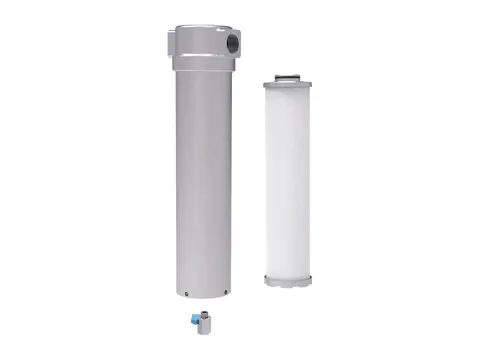
Ammonia and Refrigerant Filters
Keeps compressor oil out of your condensers and evaporators.
View product -
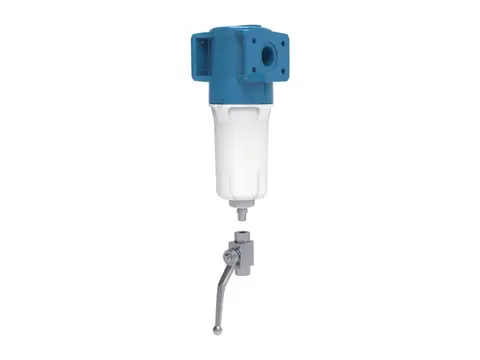
Oxygen Filters
Particle-free oxygen for your system, without adding an ignition source.
View product -
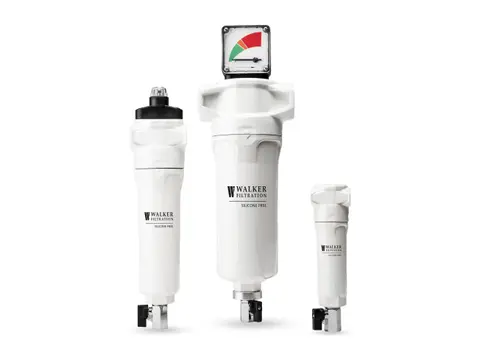
Silicone-Free Filters
Crater-free paint finishes, from air free of paint-wetting contaminants.
View product -
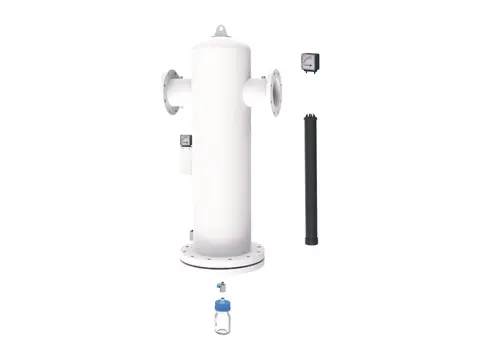
Medical Vacuum Filters
Keeps pathogens from hospital suction away from your pumps and exhaust.
View product -
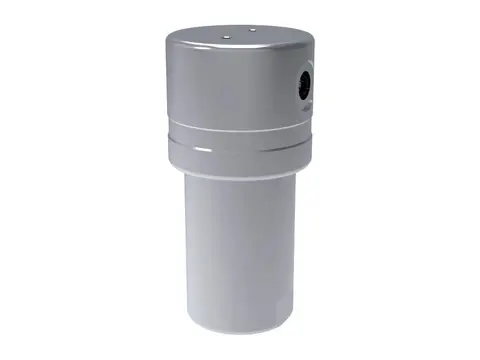
Hydrogen Filters
Particle, aerosol and oil-free hydrogen, from electrolyser to dispenser.
View product -
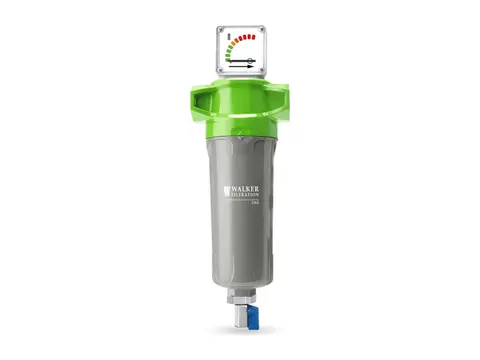
CNG Filters
Oil-free, particle-free natural gas from your compressor to the vehicle.
View product
-
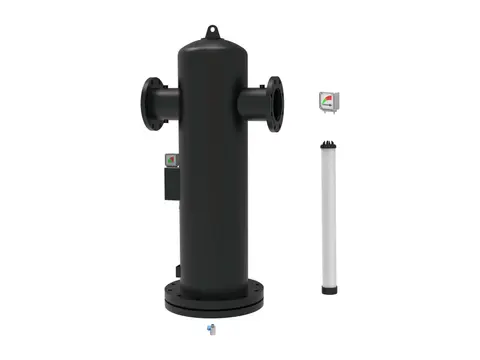
Centrifugal Moisture Separators
Bulk liquid out of your air by centrifugal force, with no element to replace.
View product -
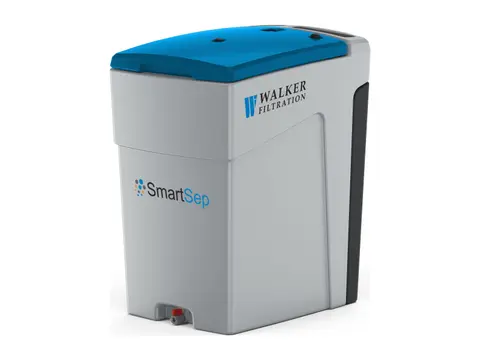
Oil Water Separator
Turns oily compressor condensate into water fit for sewer discharge.
View product -
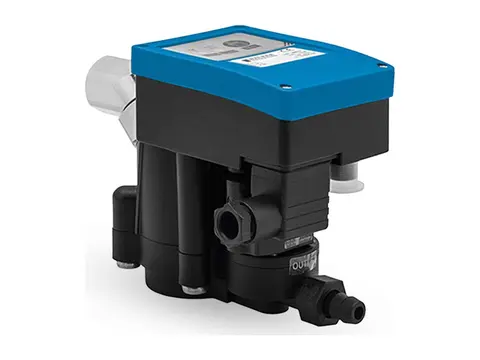
Zero-Loss Electronic Drain
Discharges every drop of condensate from your system, never your compressed air.
View product -
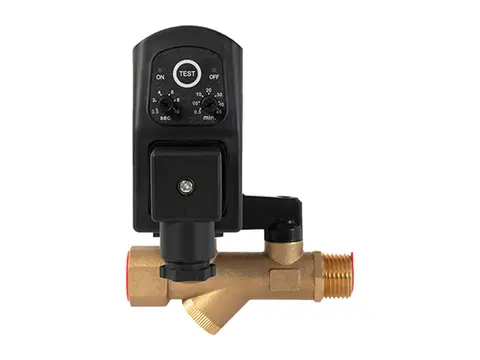
Timer Drain
Scheduled, positive condensate discharge from any collection point in your system.
View product -
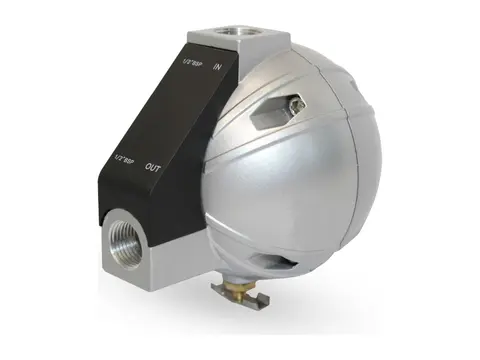
Mechanical Float Drain
Buoyancy-driven condensate removal with no power and no air loss.
View product
-
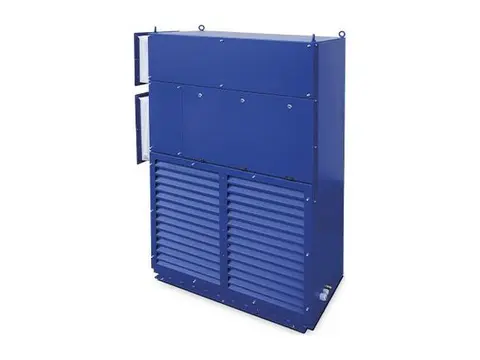
Crane Air Conditioner
Cool, clean cabins and electrical rooms for cranes working in extreme heat.
View product -
Tent Air Conditioner
Controlled climate for your tents, shelters and temporary structures.
View product -
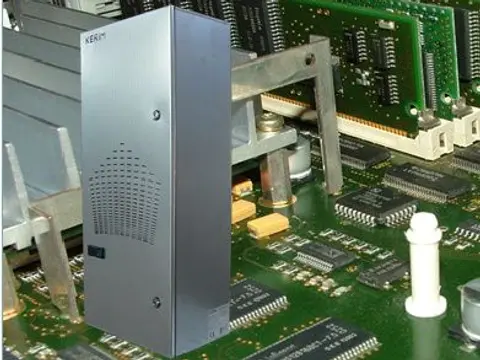
Panel Air Conditioner
Cool, clean, dry control panels, even in your hottest, dirtiest plant areas.
View product -
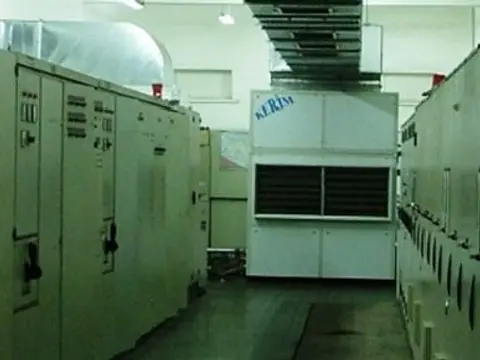
Air / Water Cooled Air Conditioner
Stable room temperatures for your electrical rooms in extreme plant heat.
View product
-
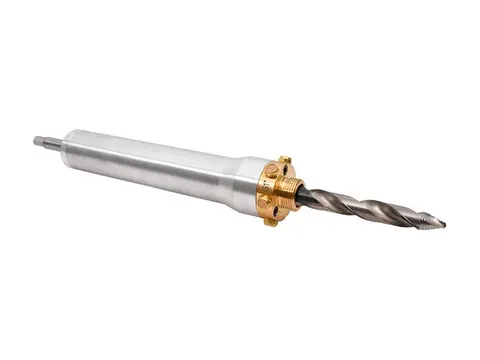
Hot Tapping
Add measurement ports to your live air lines without stopping production.
View product -
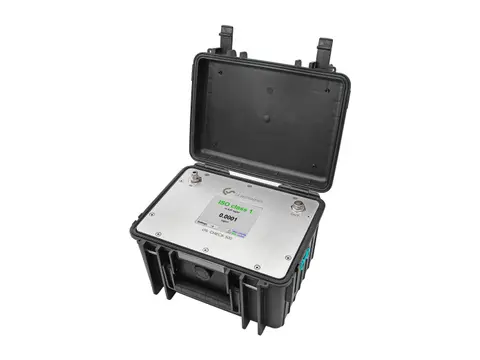
Compressed Air Quality Measurement
Prove your air's ISO 8573-1 purity: particles, oil and dew point.
View product -
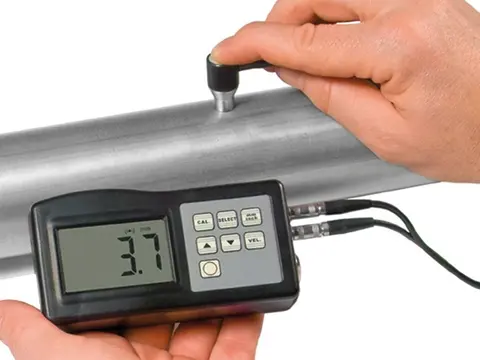
Digital Thickness Meter
Measure the metal left in your receivers and pipework, from the outside.
View product -
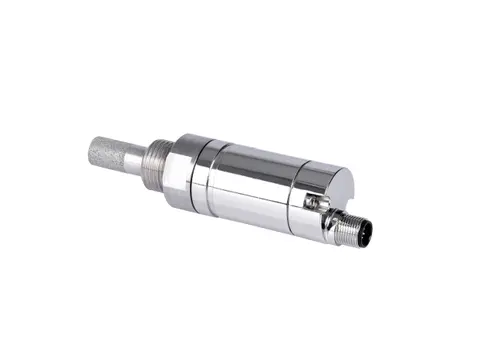
Dew Point Meter
Proof your air is dry, measured at line pressure.
View product -
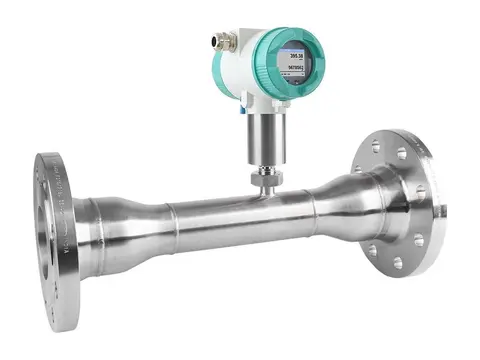
Flow Meter
True standard flow of your compressed air, whatever the line pressure.
View product -
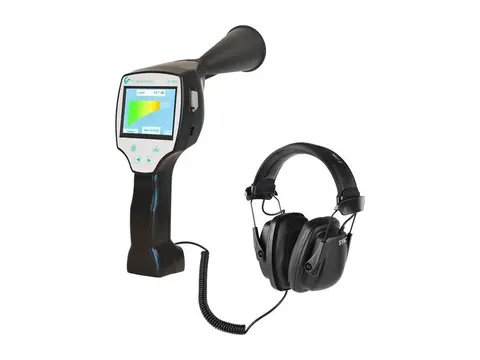
Leak Detector
Hear, locate and cost every compressed air leak in your plant.
View product -
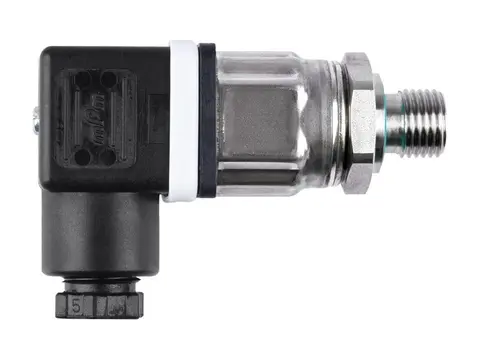
Pressure Sensor
Live pressure data from your compressor room to every point of use.
View product -
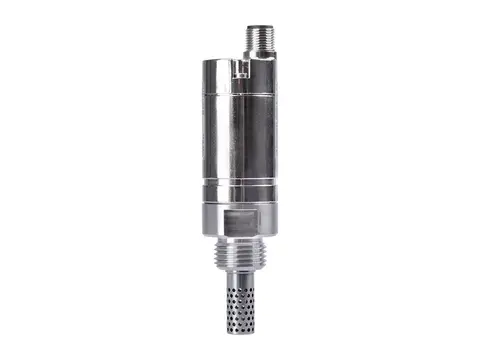
Humidity Meter
Humidity, temperature and dew point from one probe.
View product -
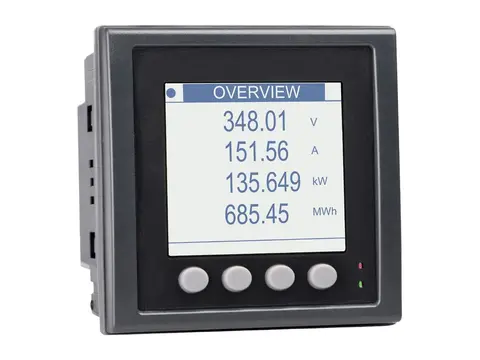
Power Meter
Measure the true power, energy and efficiency of your compressors.
View product
-
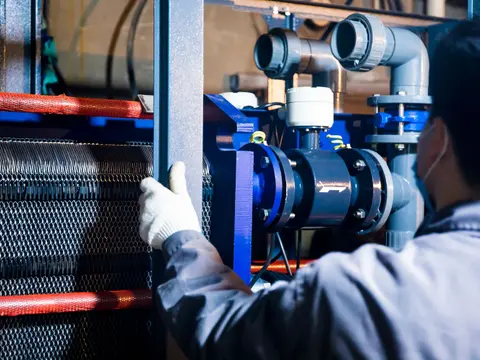
Health Testing of Compressed Air & Gas Dryers
Measured proof your dryer delivers its rated dew point.
View service -
Commissioning and Service of Compressed Air & Gas Dryers
Verified dew point from first start-up through your dryer's service life.
View service -
Compressed Air Quality Testing
Measured, documented proof of your compressed air purity class.
View service -
Dew Point Measurement Testing
Verified pressure dew point at the points that matter in your network.
View service -
Compressed Air Flow Testing
Measured air demand, leakage and cost for your plant, not estimates.
View service -
Wall Thickness Testing
Know the remaining wall, corrosion rate and safe life of your equipment.
View service -
Sourcing
Spares, consumables and whole systems for your plant, sourced globally.
View service
