
Compressed Air & Gas Filters
Particulate Filter
Stop dryer dust, rust and scale at the source, so only clean, dry air travels on through your plant.
Product overview
Clean, dry air with a particle class you can specify
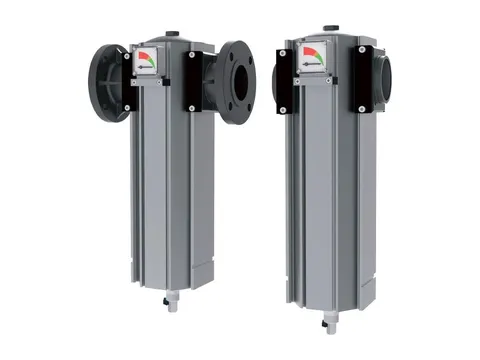
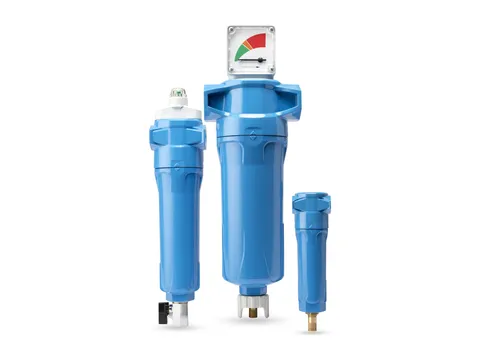
Our particulate filter takes the solid particles out of dry compressed air and technical gases: desiccant dust, carbon fines, rust, pipe scale and wear debris. It sits where the water and oil have already gone, most often straight after a desiccant dryer, after an activated carbon adsorber, and at the point of use ahead of sensitive equipment.
The general-purpose 1 µm grade removes desiccant dust, rust and scale to protect your valves, cylinders and instruments. The high-efficiency 0.01 µm grade removes sub-micron particles for air that touches product, enters a cleanroom or feeds an analyser. Coarse grades of 5–25 µm collect pipe scale and weld debris in older or newly built networks.
The captured solids stay in the medium, so the filter needs no condensate drain in normal service. It sets the first digit of your ISO 8573-1:2010 purity class, the particle class.
- 0.01 µmHigh-efficiency grade
- 1 µmGeneral-purpose grade
- No drainNeeded in dry service
- 12 monthsElement change interval
Benefits
The problems it solves
Drying the air stops new corrosion, but it does not remove the particles already there, and a desiccant dryer adds dust of its own. Here is what those particles do, and how the filter stops them.
-
Scored valves and cylinders
The problem
Hard particles such as alumina and iron oxide score cylinder bores, valve spools and air motor vanes, raising internal leakage and air consumption.
How it solves it
Your valves, cylinders, regulators, air motors and instruments suffer less abrasion, sticking and blockage.
-
Dust spread through the network
The problem
Desiccant beads and carbon granules rub against each other and release fines that deposit along pipe walls and shed later in flow surges.
How it solves it
A filter straight after the dryer or carbon adsorber holds these fines inside the air treatment room, so they never enter your distribution network.
-
Defects in your product
The problem
Particles deposit wherever compressed air touches a surface: paint films, food, packaging, moulded parts, wafers and optics.
How it solves it
Paint finishes, packaging, moulded parts and wafers stay free of particle marks and inclusions.
-
An audit you must pass
The problem
Regulated customers audit compressed air against a particle class, which cannot be met without dedicated particulate filtration.
How it solves it
Tested grades deliver the particle class your specification or audit requires under ISO 8573-1:2010, verifiable by particle counting under ISO 8573-4.
-
Costly stages downstream
The problem
Sterile filters, membranes and analysers have a finite dirt-holding capacity and are expensive to replace.
How it solves it
A particulate filter upstream takes the bulk particle load, so these high-value stages last longer.
-
Guesswork on element changes
The problem
An overloaded element can tear and release its collected dust downstream in one event.
How it solves it
Differential pressure shows the loading, so elements are changed on evidence, and a sudden fall reveals a ruptured element at once.
Where it’s used
Wherever dust would mark the product or wear the machine
From the air treatment room to the machine itself, particulate filtration protects the processes where a single particle matters.
-

Food and beverage
Bottle blowing, product ejection, cutting knives, packaging and powder conveying, where BCAS Guideline 102 specifies particle Class 2.
-

Pharmaceuticals
Tablet coating, capsule filling, blister packaging and fermentation air, where vented air must not raise cleanroom particle counts.
-

Automotive and surface finishing
Spray painting, powder coating and body-shop air, where particles show as visible defects in the paint film.
-

Plastics
PET blow moulding, material drying and mould release, where the air must not mark the product.
-
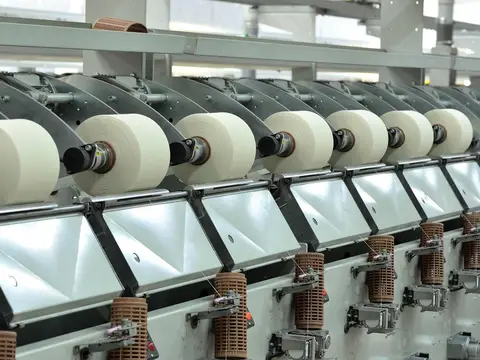
Textiles
Air-jet looms and texturing nozzles, which block and wear when abrasive particles are present.
-

Power and process instrument air
Instrument air in oil, gas, refining and power generation, protecting the small orifices in positioners and pneumatic controllers.
Also healthcare, electronics and semiconductors, nitrogen and oxygen generation, laboratories and analytical instruments, printing and paper, and breathing air.
How it works
Hold every particle in the fibres
The gaps between the fibres are far larger than the particles caught, so the medium works in its depth: each particle is held once it touches a fibre.
-
1. Air entersDry air enters the housing head and is directed into the bowl, around the outside of the element.
-
2. Through the mediumThe air passes from outside to inside through the pleated glass microfibre medium. Particles are caught by straining, impaction, interception and diffusion, and held on the fibres.
-
3. Supported and sealedThe perforated core carries the pressure load so the element cannot collapse, and an O-ring seals the end cap against the head so no air bypasses the medium.
-
4. Clean air outThe clean air rises through the element core and leaves through the outlet. The collected dust stays on the outer layers and leaves with the element when it is changed.
-
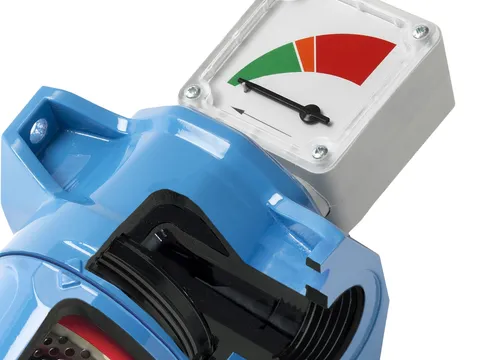
5. Watch the gaugeThe differential pressure gauge shows how loaded the element is. The manual drain should stay dry: liquid in the bowl means something upstream has failed.
Get the full details
Our brochure covers it in detail, and our questionnaire tells us what we need to recommend the right one for your plant.
Keep exploring
More from our range
Equipment for every stage of your compressed air, and our own engineers to test, commission and look after it.
-
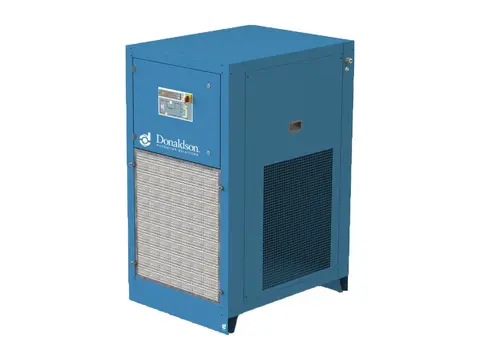
Refrigerated Air Dryers
Dry, condensate-free air for your plant, with no compressed air spent drying.
View product -
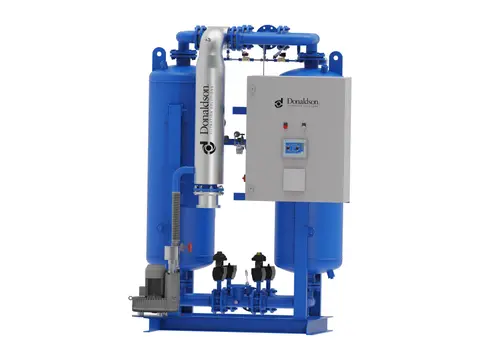
Heated Desiccant Dryers
Deep, stable dew points for your air, with heat doing the regeneration.
View product -
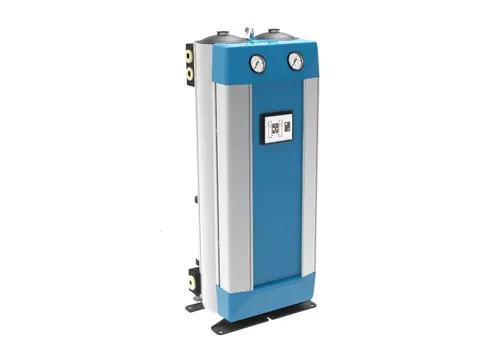
Heatless Desiccant Dryers
Deep dew points without heaters, for hazardous areas and remote sites.
View product -
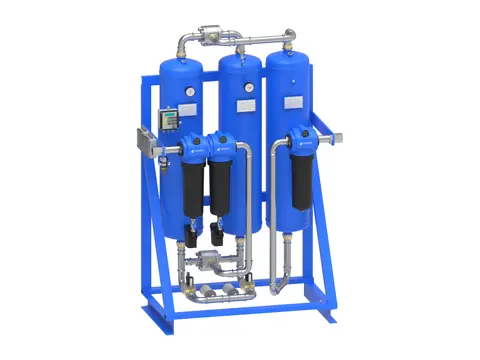
Breathing Air Systems
Your plant’s compressed air, made safe to breathe.
View product -
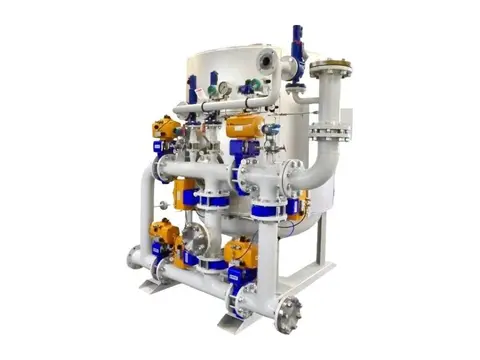
Hydrogen Dryers & De-Oxo Units
Electrolytic hydrogen purified of oxygen and water, ready for fuel cells.
View product -
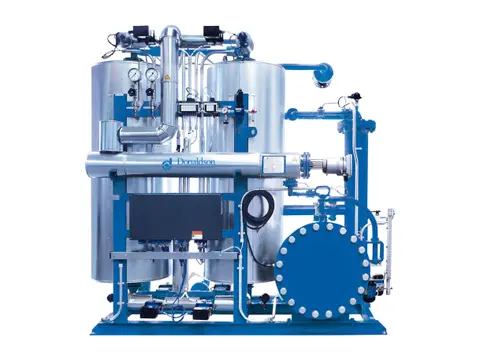
Biogas & Natural Gas Dryers
Dry, condensate-free fuel gas for your engines, boilers and upgrading plant.
View product -
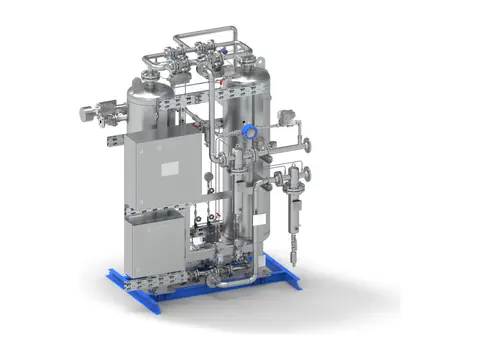
CO₂ Dryers
Beverage-grade dry CO₂ for your recovery plant, with no gas vented.
View product -
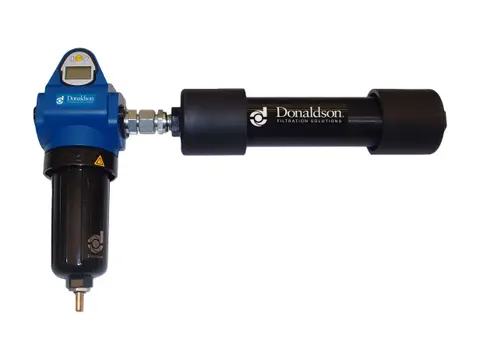
Membrane Dryers
Dry air at the point of use, with no power and no moving parts.
View product
-
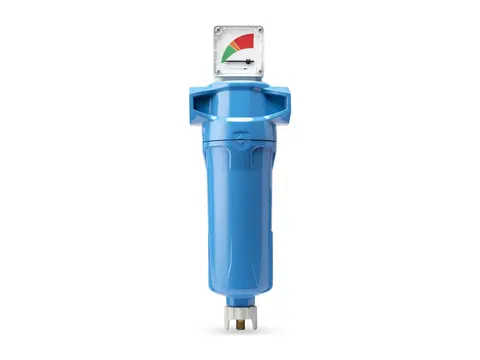
Coalescing Filters
Takes oil and water aerosols out of your air, down to 0.01 mg/m³.
View product -
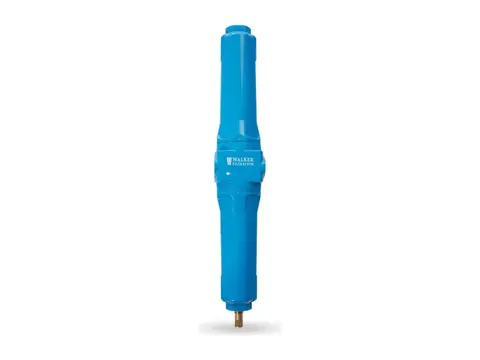
Compressed Air Duplex Filters
Change filter elements without interrupting your air supply.
View product -
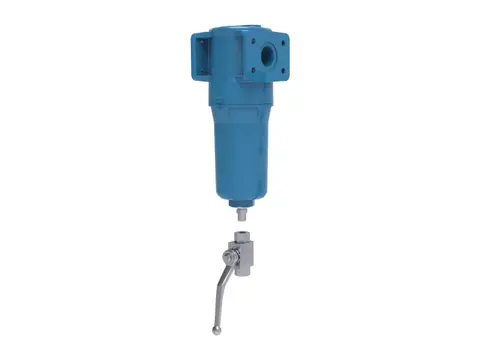
High Pressure Filters
Certified air purity for your high-pressure lines, up to 350 bar g.
View product -
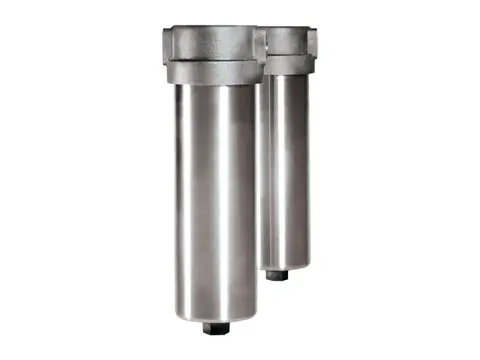
High Temperature Filters
Particle-free compressed air and gas where your process runs hot.
View product -
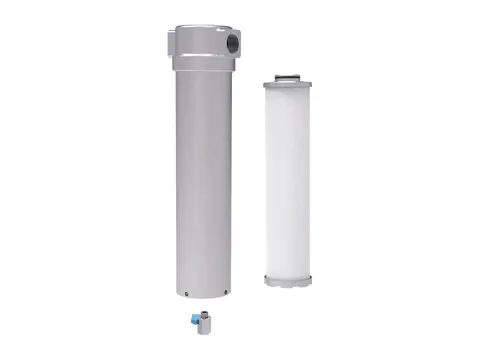
Ammonia and Refrigerant Filters
Keeps compressor oil out of your condensers and evaporators.
View product -
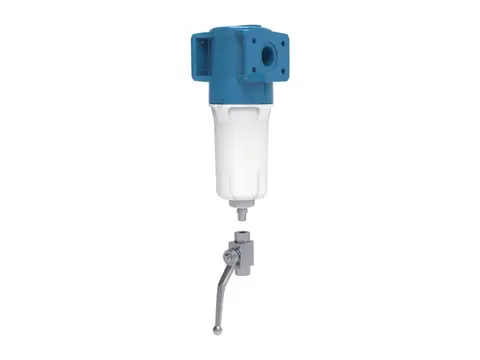
Oxygen Filters
Particle-free oxygen for your system, without adding an ignition source.
View product -
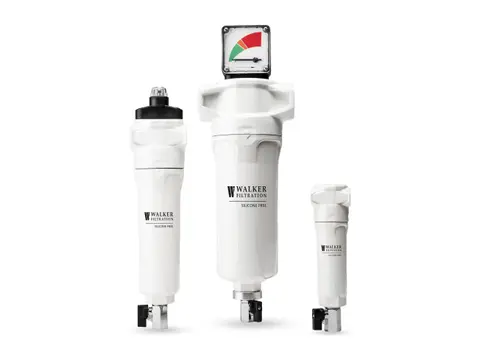
Silicone-Free Filters
Crater-free paint finishes, from air free of paint-wetting contaminants.
View product -
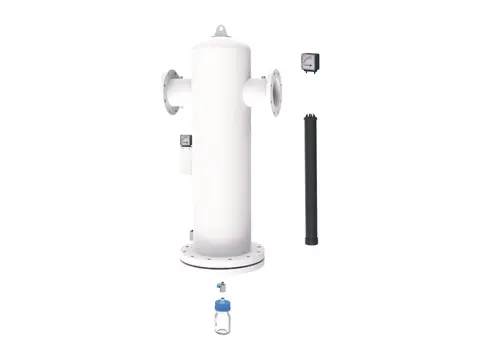
Medical Vacuum Filters
Keeps pathogens from hospital suction away from your pumps and exhaust.
View product -
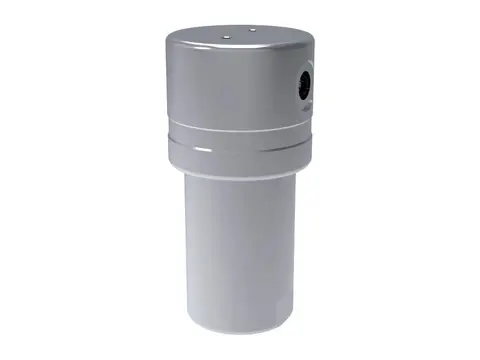
Hydrogen Filters
Particle, aerosol and oil-free hydrogen, from electrolyser to dispenser.
View product -
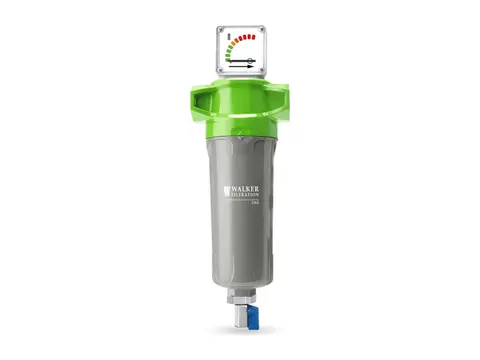
CNG Filters
Oil-free, particle-free natural gas from your compressor to the vehicle.
View product
-
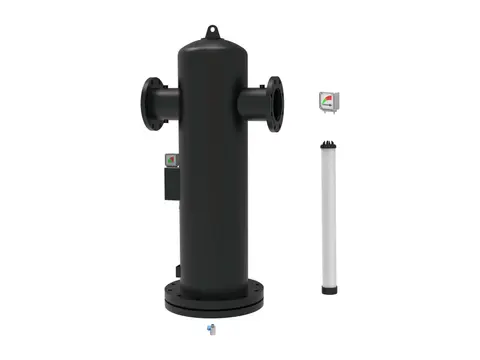
Centrifugal Moisture Separators
Bulk liquid out of your air by centrifugal force, with no element to replace.
View product -
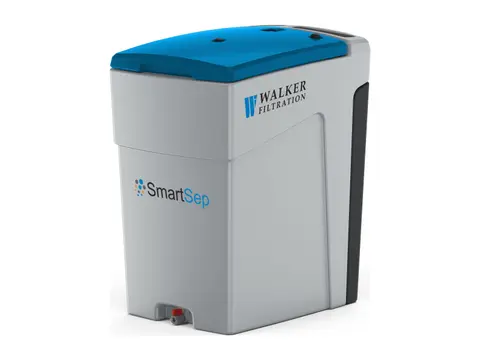
Oil Water Separator
Turns oily compressor condensate into water fit for sewer discharge.
View product -
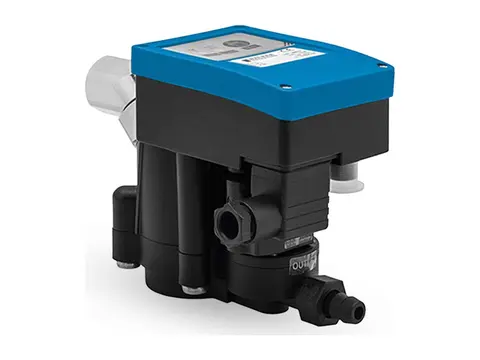
Zero-Loss Electronic Drain
Discharges every drop of condensate from your system, never your compressed air.
View product -
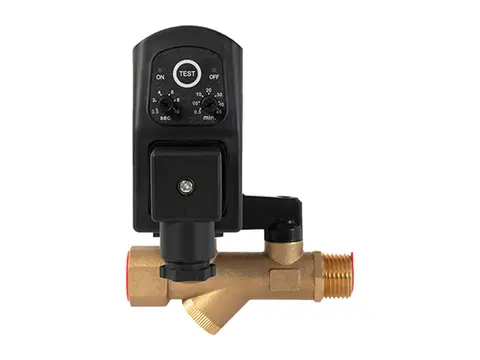
Timer Drain
Scheduled, positive condensate discharge from any collection point in your system.
View product -
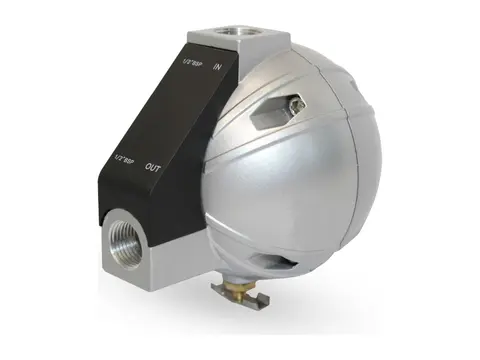
Mechanical Float Drain
Buoyancy-driven condensate removal with no power and no air loss.
View product -
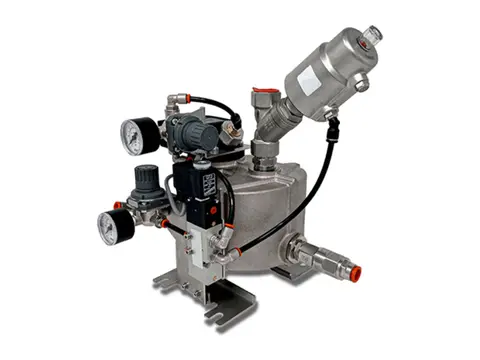
Vacuum Drain
Empties liquid from your vacuum system without breaking the vacuum.
View product
-
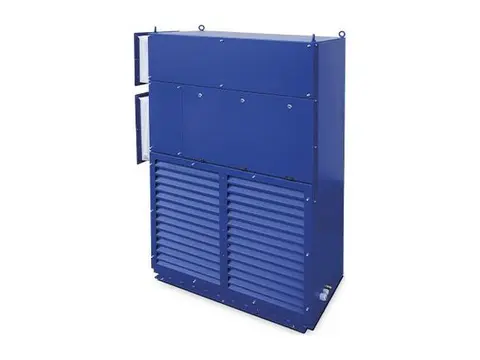
Crane Air Conditioner
Cool, clean cabins and electrical rooms for cranes working in extreme heat.
View product -
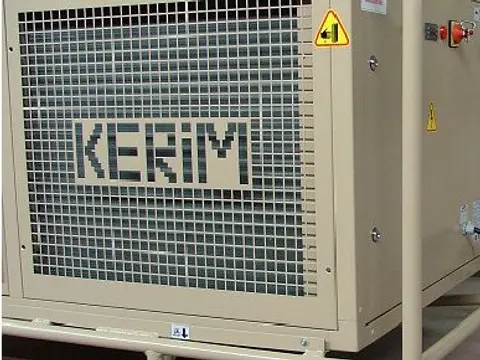
Tent Air Conditioner
Controlled climate for your tents, shelters and temporary structures.
View product -
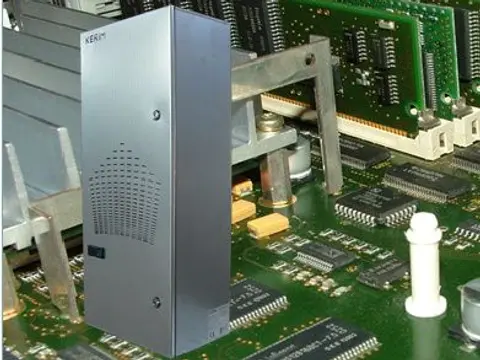
Panel Air Conditioner
Cool, clean, dry control panels, even in your hottest, dirtiest plant areas.
View product -
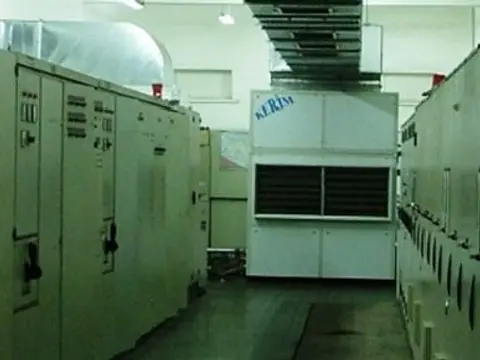
Air / Water Cooled Air Conditioner
Stable room temperatures for your electrical rooms in extreme plant heat.
View product
-
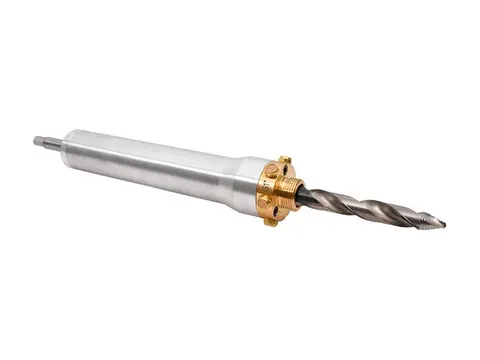
Hot Tapping
Add measurement ports to your live air lines without stopping production.
View product -
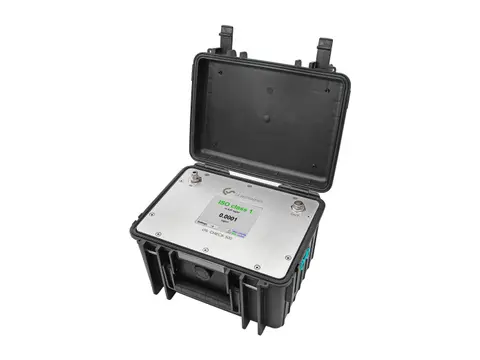
Compressed Air Quality Measurement
Prove your air's ISO 8573-1 purity: particles, oil and dew point.
View product -
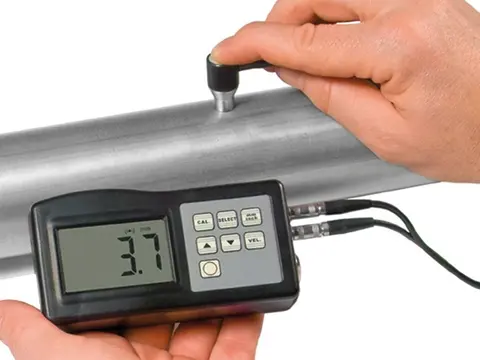
Digital Thickness Meter
Measure the metal left in your receivers and pipework, from the outside.
View product -
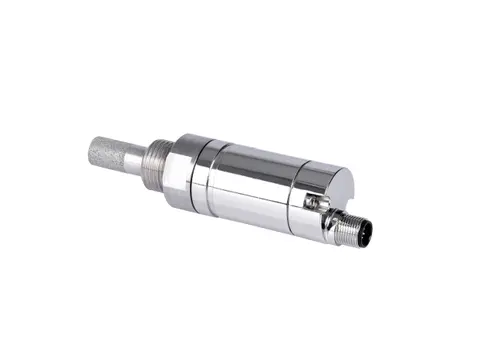
Dew Point Meter
Proof your air is dry, measured at line pressure.
View product -
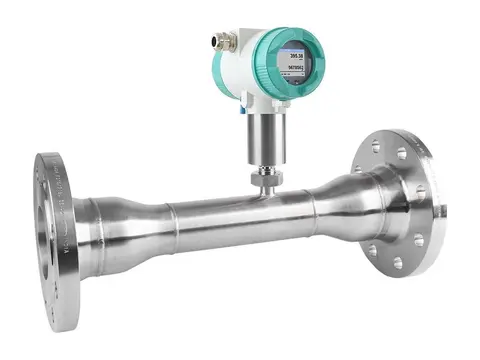
Flow Meter
True standard flow of your compressed air, whatever the line pressure.
View product -
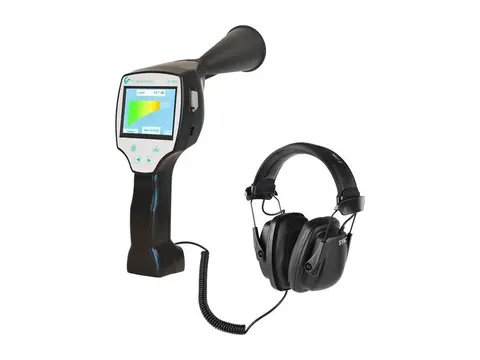
Leak Detector
Hear, locate and cost every compressed air leak in your plant.
View product -
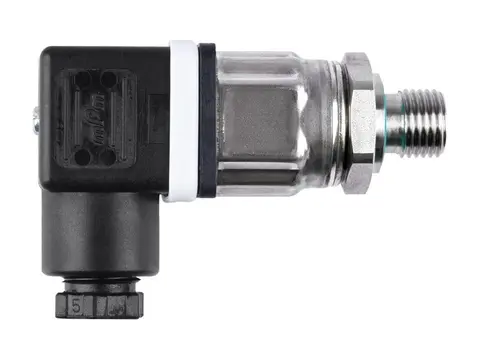
Pressure Sensor
Live pressure data from your compressor room to every point of use.
View product -
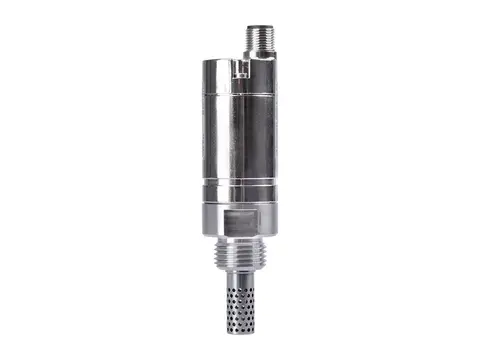
Humidity Meter
Humidity, temperature and dew point from one probe.
View product -
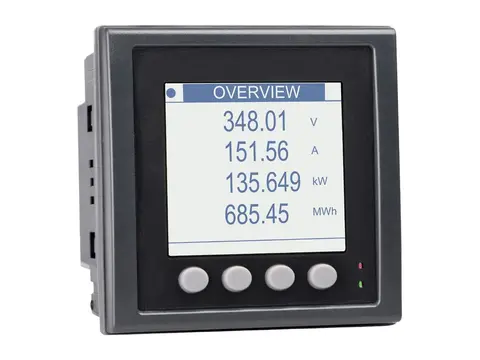
Power Meter
Measure the true power, energy and efficiency of your compressors.
View product
-
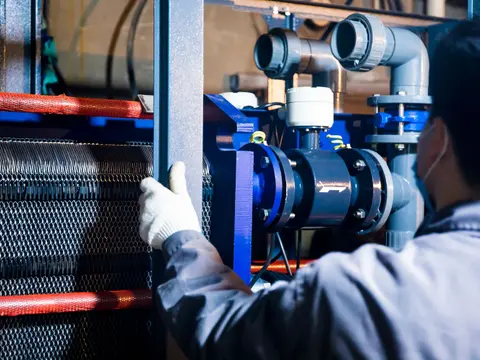
Health Testing of Compressed Air & Gas Dryers
Measured proof your dryer delivers its rated dew point.
View service -
Commissioning and Service of Compressed Air & Gas Dryers
Verified dew point from first start-up through your dryer's service life.
View service -
Compressed Air Quality Testing
Measured, documented proof of your compressed air purity class.
View service -
Dew Point Measurement Testing
Verified pressure dew point at the points that matter in your network.
View service -
Compressed Air Flow Testing
Measured air demand, leakage and cost for your plant, not estimates.
View service -
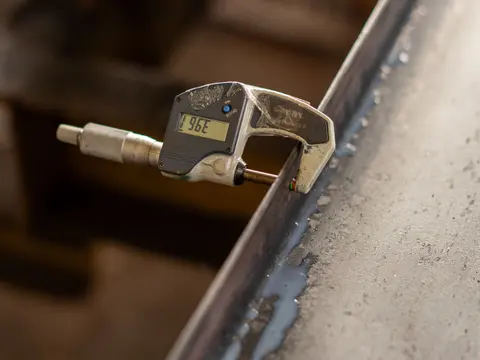
Wall Thickness Testing
Know the remaining wall, corrosion rate and safe life of your equipment.
View service -
Sourcing
Spares, consumables and whole systems for your plant, sourced globally.
View service
